Our capabilities

Our capabilities

Mitak combines disciplined quality management, continuous innovation and large-scale manufacturing capability to deliver reliable cast wear components to demanding industrial markets worldwide.

Supported by certified systems, advanced engineering technologies and fully integrated foundry operations, the company manages the complete production cycle in-house, from design and simulation through casting, heat treatment, machining and final inspection, ensuring consistent performance, traceability and dependable delivery for both local and international customers.

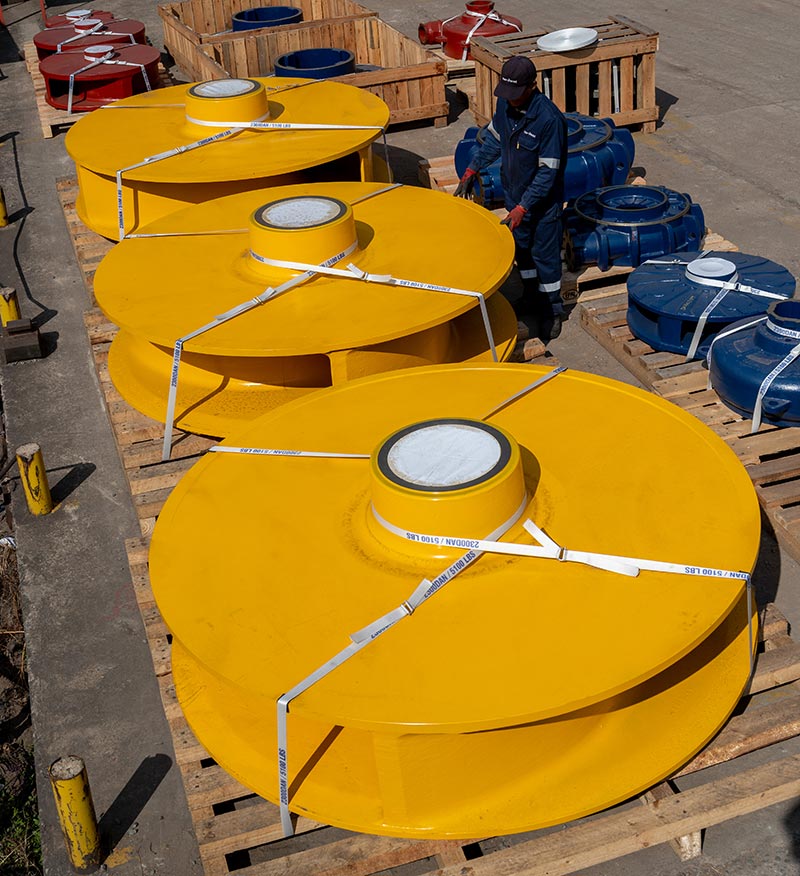
Capacity to produce

20 ton

finished mass parts.
High chrome casting foundry capabilities

Quality

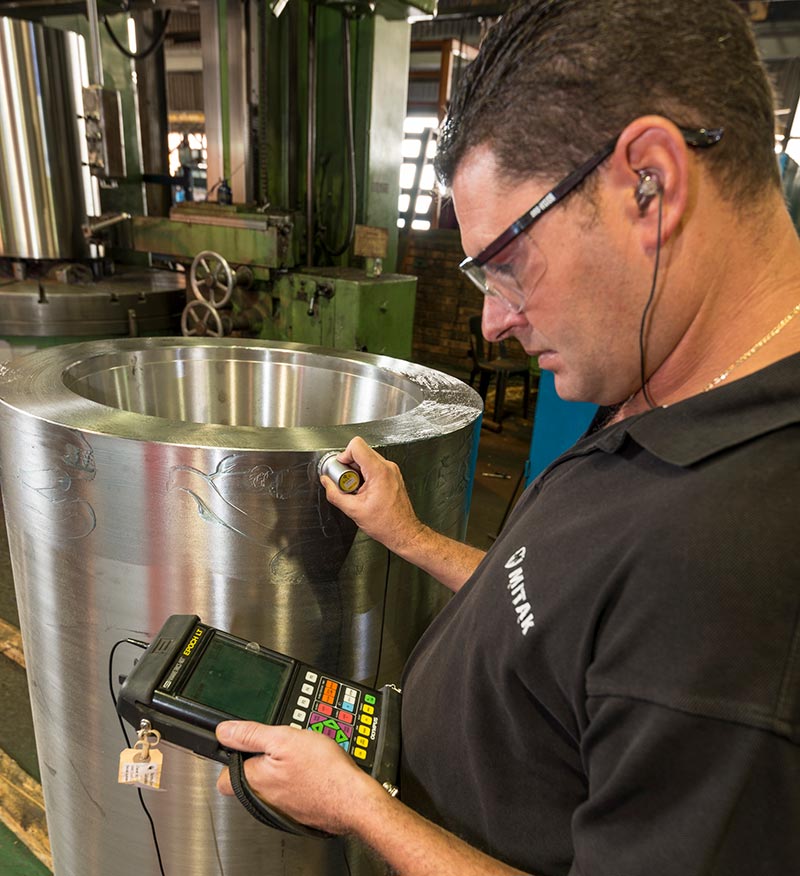
Mitak maintains a disciplined quality management system supported by a dedicated team responsible for in-process and final inspection. Certified to ISO 9001:2015 since 2000, the company applies strict controls to ensure compositional accuracy, dimensional precision and casting integrity in each stage of production.

Inspection and testing capabilities include digital measurement using CMM, full capabilities for materials analysis as well as non-destructive testing where required. Heat treatment is carried out under monitored conditions to achieve consistent metallurgical properties.

Mitak ensures traceability of parts, processes and documentation. Quality oversight extends to planning and delivery performance, which is supported by production scheduling and logistics. This enables dependable supply to both domestic and international customers.

Innovation

Mitak’s objective is to remain a preferred global supplier of cast wear components through disciplined innovation, continuous improvement and dependable service. Mitak is a global leader in leading-edge composite materials. These have been successfully used for over 20 years for wear parts that are subjected to extreme operating conditions. Up to 8x improvements in wear life have been recorded.

Investment in advanced engineering and manufacturing technologies supports improved casting integrity, dimensional accuracy and reduced lead times. Digital simulation tools are used to optimise foundry methods and improve yield and casting quality, while modern prototyping, measurement and CNC machining capabilities enhance precision and repeatability. A sophisticated finite planning system coordinates manufacturing across the plant.

Capacity

Mitak operates large-scale, fully integrated foundry facilities with the capacity to produce up to 1,000 tons of finished castings per month, including individual components weighing up to 20 tons. This is supported by production planning systems that provide dependable delivery dates across both high volume and engineered-to-order supply.

Full in-house capabilities spanning engineering, patternmaking, moulding, melting, heat treatment, machining and quality control, enable Mitak to manage the full manufacturing cycle under one roof. Multiple moulding bays, high-capacity induction furnaces, heavy-lift handling and large-format machining equipment allow the company to produce components ranging from small precision parts to large, complex castings for demanding industrial applications. Mitak’s Logistics Team ensures the most efficient delivery of each finished product.

Case Studies
Vertical Roller Mill Grinding Elements

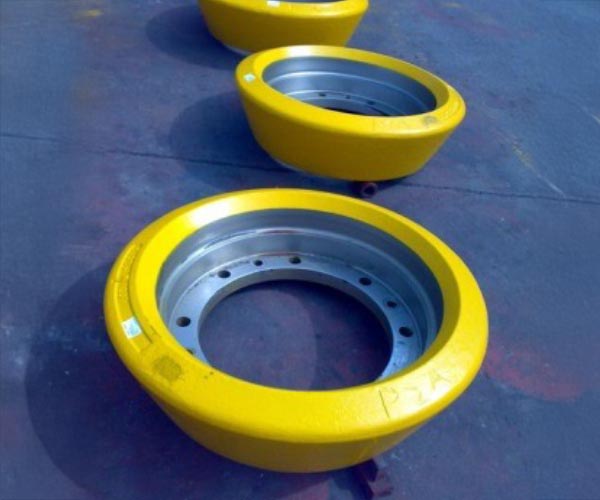
Mitak utilised its advanced Mitak IC ceramic composite material and achieved a wear life many times that of standard high chrome.
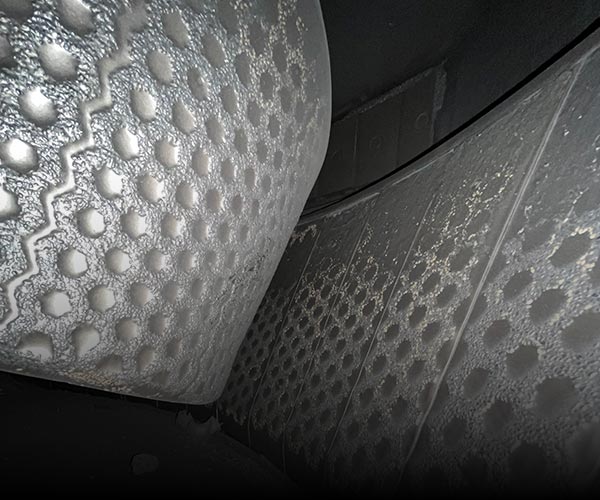
A South African Power Station had for decades used standard High Chrome White Iron alloys for their grinding elements.  A tyre was lasting on average 1,500 hours and a set of table segments 2,500 hours.

The parts were replaced with an initial trial set made in Mitak IC – an advanced metal ceramic composite that combines the wear resistance of ultra-hard ceramic with the strength of a cast white iron matrix.

An extensive investigation was done by the plant owner to evaluate the performance of the new material.  This work, which took over a year to complete, measured the tyres in nine places across the wearing face.  The average wear rate over the entire tyre was 306.6mm per hour an improvement of over 4 times that of the standard white iron.

In spite of this success, a number of further improvements were made by Mitak to increase the ceramic coverage and depth of ceramic in the wear profile.   Today, all of the tyres and segments made in standard white iron have been replaced with the Mitak IC material.   The tyres now have a wear life of between 8,000 and 11,000 hours and the segments last well beyond this.

The ultimate measure of the success of Mitak IC shows in the consumption of spares:  The station was expected to use more than 30 sets of tyres and segments a month.  Now, by using Mitak IC, it uses on average only 2 sets per month.

DOWNLOAD CASE STUDY PDF

Primary Gyratory Concave Liners

Mitak has successfully converted MnSteel concave liners to Mitak White Iron and introduced a re-enforcement for added peace of mind.
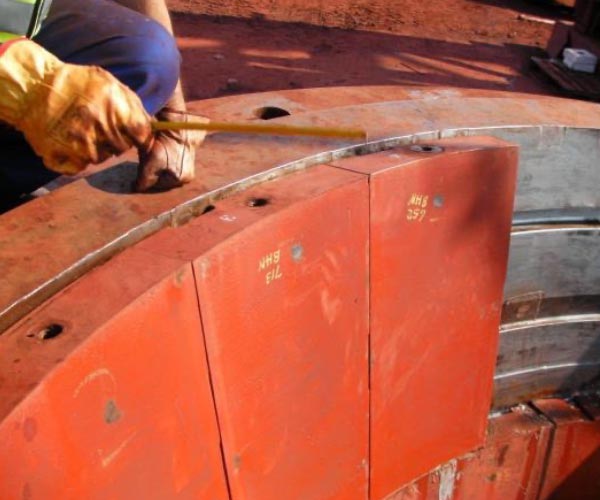
Mitak has been manufacturing high chrome re-enforced concaves for primary gyratory crushers since 1985.  These concaves were previously cast mainly in 14% manganese steel and in low alloy steel.

The two problems that were most often encountered prior to converting to Mitak high chrome had been poor wear life and growth of manganese steel which lead to the constant need for gouging.   In each highly abrasive application, the Mitak product proved superior in terms of wear life, ease of installation and reduced maintenance costs.

Improvements in wear life of three fold and more have been achieved in all conversions.  Machine downtime also reduced due to simpler installation, more predictable wear patterns – and the need to gouge was eliminated.

The table to the right shows the performance of Mitak concaves compared to conventional Manganese steel.

The following features differentiate the Mitak product:

  • The Mitak alloy has a minimum hardness above 600 BHN and has been developed to withstand the rigors of primary crushing.
  • Concaves are supplied with cast-in steel re-enforcing to extend their duty.
  • Mitak concaves are simple to fit by following a tried and tested installation procedure or by using the pin method.
  • They are supplied with threads on their top face and each set is supplied with lifting eyes. This eliminates the need for potentially unsafe lifting eyes cast into the working face.
  • Castings are supplied stacked upright in secure crates to make for simple and quick handling.
  • Correct fitment is assured through each set of concaves being test fitted into a jig made to the crusher bowl dimensions. Concaves are supplied numbered to be installed in sequence.

DOWNLOAD CASE STUDY PDF >>

Raymond Mill Grinding Spares

In the search for improved grinding performance and lower maintenance costs, Mitak IC composite was successfully used on the Raymond Mill.
A large coal grinding facility had for years depended on weld overlay as the best means of extending the wear life of its Raymond Mill grinding spares: grinding rollers and segmented bull rings.

The chromium carbide overlay was reported to offer better wear life than standard 600BHW high chrome castings. In time, the coal quality badly deteriorated and contaminants increased. The plant’s maintenance team was being overwhelmed with more frequent mill overhauls. Also, the need for more weld overlays greatly added to costs. Trials of new types of weld overlays did little to improve the situation and were expensive.  Mitak carefully studied the mills and the worn components.

A proposal was made to use its Mitak IC material. The profiles of the ceramic in the parts were specified to ensure maximum wear life. Close consultation with the customer resulted in a series of carefully managed trials being conducted over two years. The result was that Mitak IC outlasted the weld overlay by a factor of 3-4 times – and the trials are still in operation with no plans for them to be removed. Furthermore, grinding efficiency of the mills improved because the flat profile of the tyres was retained for longer, resulting in better coal throughput and less power consumption per ton milled. A key reason for the improvement in the wear life was the build-up of coal in the wear face, which resulted in autogenous ‘coal-on-coal’ grinding taking place.

The Mitak IC material is now being rolled out in all the mills and weld overlay will be phased out.

DOWNLOAD CASE STUDY PDF >>